Solar aquaponicsPrototype V1Doc PLY-V1-001

A tiny ecosystem that grows with the sun.

Polyponic is a solar powered aquaponics garden for balconies and apartments. A calm aquatic world below, fresh herbs and microgreens above, connected by nature’s own filter and never plugged into a wall.

20 L
water volume
30 W
solar panel
0
wall outlets
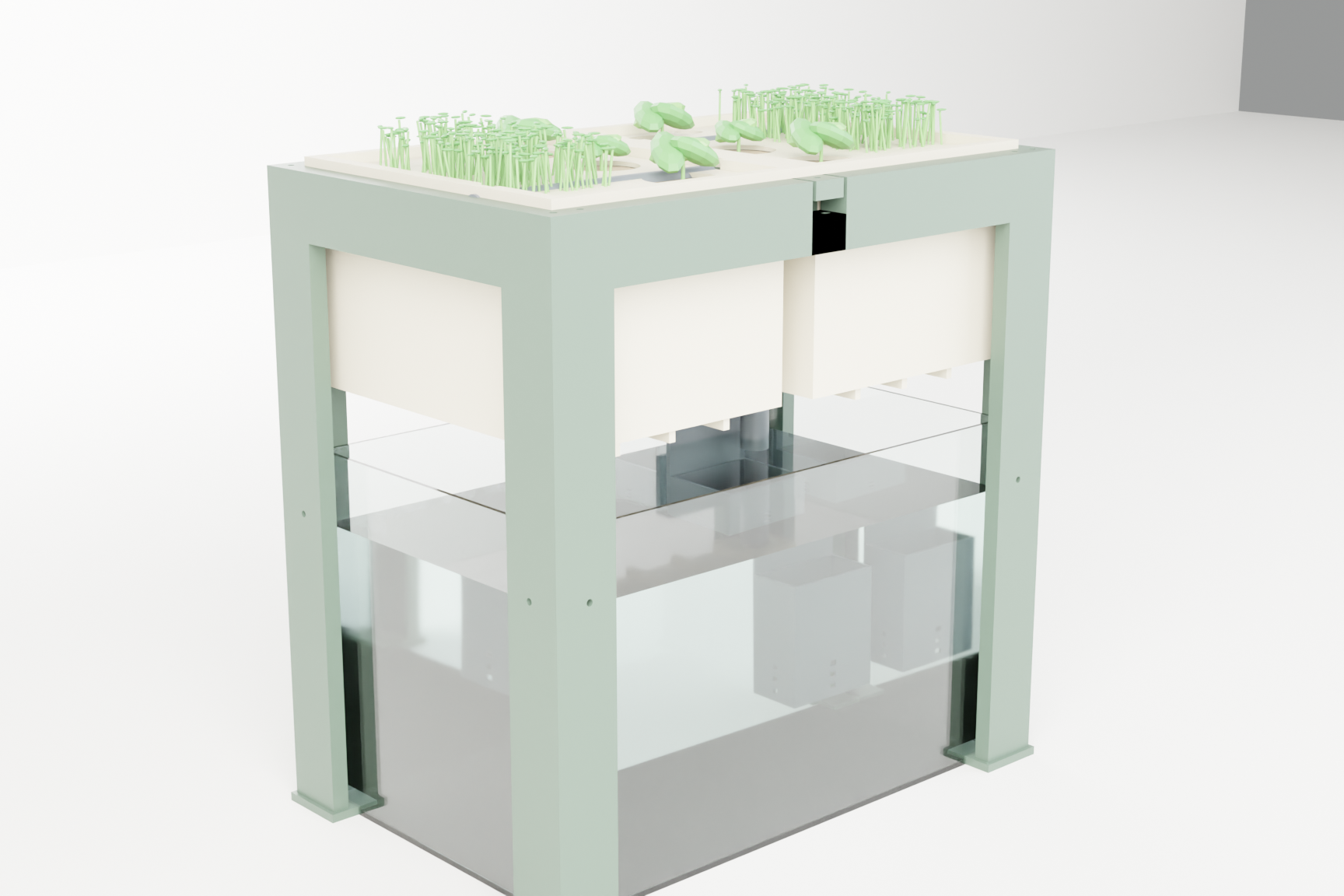
Ray traced render of the Polyponic V1 aquaponics garden: a sage green frame with a glass water tank below and planted grow trays above.
Fig. 0 · CAD accurate render of the V1 engineering prototype
01How it works

One loop, powered by daylight.

  1. 01

    The sun does the work

    A 30 watt panel and a small battery run the pump day and night. No outlet, no wiring, no electrician.

  2. 02

    Water rises

    A whisper quiet 4 watt pump lifts water from the tank to two grow trays a few times an hour.

  3. 03

    Life filters it

    Beneficial bacteria living on the clay pebbles turn waste from shrimp and snails into plant food, the same nitrogen cycle that runs every river on Earth.

  4. 04

    Herbs grow, water returns

    Basil, mint and microgreens drink the nutrients, and clean water falls quietly back to the tank. Nothing is wasted.

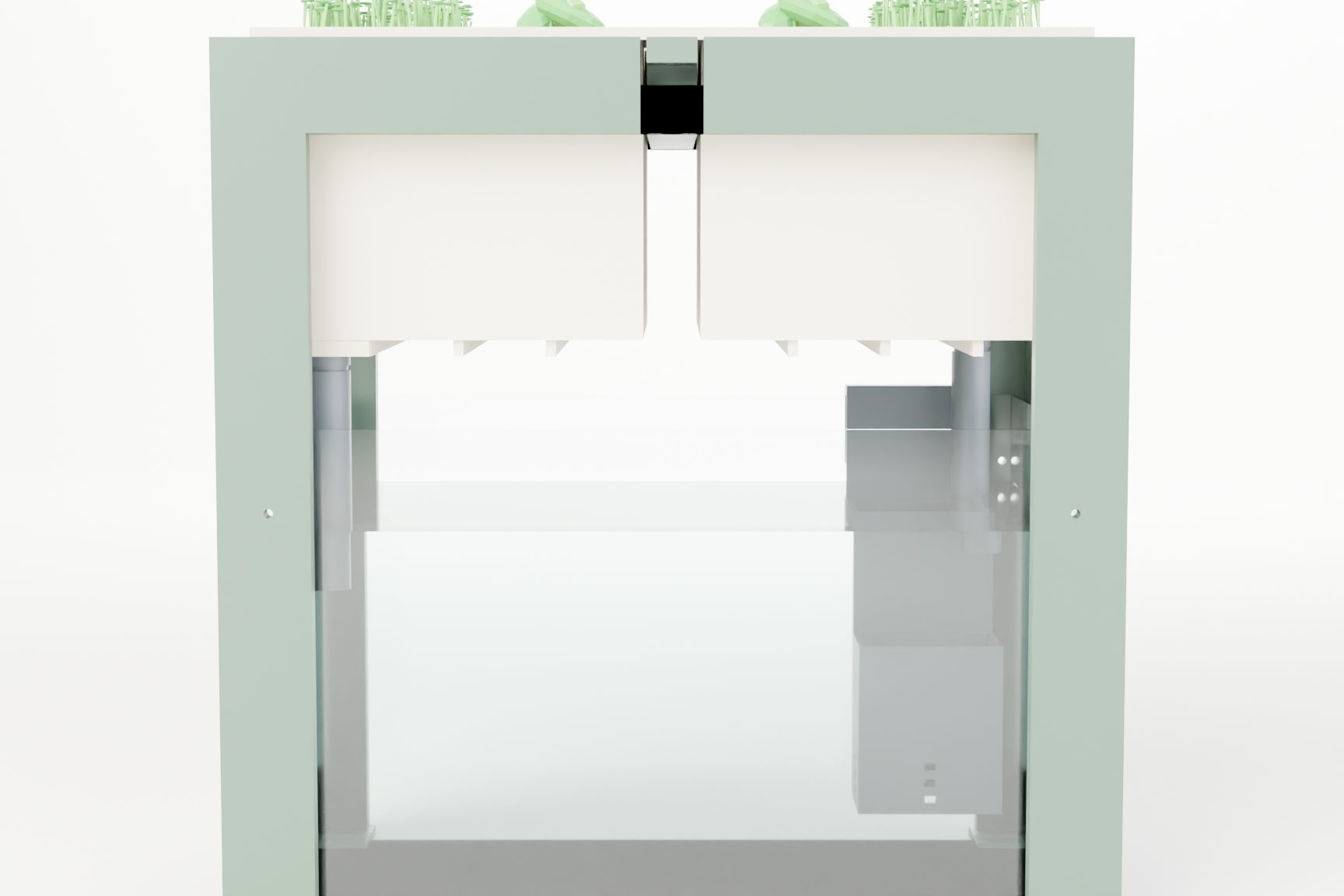
Front view of the Polyponic garden showing two grow trays above the glass water tank.
Fig. 1 · Front elevation, V1

02   Honest by design

We designed it around the animals, not the ad copy.

Most tabletop aquaponics products put fish in tanks that are too small for them, and their reviews show it. We did the research first: the UN’s aquaculture guidance recommends no food fish in tanks under 500 litres, so Polyponic doesn’t pretend otherwise. Our 20 litre ecosystem is designed for the creatures that actually thrive at this size: cherry shrimp and freshwater snails, with an optional tier of hardy white cloud minnows in the larger configuration. The grow bed is a living filter first and an herb garden second, so expect fresh garnishes and weekly microgreen harvests, not grocery store volumes. That is the honest promise, and it is still a small daily miracle on your balcony.

500 L
the science based minimum for food fish, and we respect it
20 L
designed for shrimp, snails and nano fish
0
exaggerated claims
03The science

We show our math.

Polyponic V1 came out of a gated engineering program: a 182 source research review, quantitative models, parametric CAD, failure analysis and a simulated century of weather, all before the first part is printed.

182

peer reviewed papers, FAO manuals and datasheets behind the design

6.8 to 18x

biofilter capacity margin over worst case feeding (calculated)

12 / 12

months of full solar operation in Los Angeles weather (modeled, 30 Wp panel)

300 years

of simulated LA weather survived in our digital twin (modeled)

9

failure scenarios analyzed; none puts water on your floor (calculated)

40 dB

quieter than a library noise target (to be verified in testing)

10 min / wk

the honest maintenance budget

28

failure modes analyzed and designed against

Figures marked calculated or modeled are engineering results pending physical validation of the first prototype. We publish our test plan and we will publish the measurements. Section 04 sets out how each figure was derived.

04Methods and assumptions

How each number was produced.

Every figure on this page carries one of three labels. Calculated means it comes from a first principles engineering model. Modeled means a simulation produced it against reference data. Target means it is design intent that has not been measured yet.

Biofilter margin, 6.8 to 18x

Calculated

Nitrification capacity of the clay pebble bed compared with the ammonia load of worst case feeding, using published surface area conversion rates from FAO manuals and peer reviewed aquaculture literature. The range covers the span between conservative and typical rate assumptions.

PendingAn eight week cycling trial with water chemistry logged on the first prototype.
12 of 12 months of solar operation

Modeled

Hourly energy balance of a 30 Wp panel against pump duty cycle and controller draw, run against a Los Angeles typical meteorological year with panel derating for temperature, soiling and conversion losses.

PendingAn instrumented outdoor run recording panel yield, battery state and pump runtime.

300 years of simulated weather

Modeled

The same energy model driven by resampled sequences of the reference weather record, checking every simulated year for a battery depletion event rather than only average conditions.

PendingNothing beyond the outdoor solar run above; the model is validated by that test.

Battery autonomy, 2 to 3.5 days

Modeled

Usable battery energy divided by daily pump and controller consumption with no solar input. The range spans the normal duty cycle and the reduced duty cycle the controller falls back to.

PendingA bench discharge test at both duty cycles, measured to the low voltage cutoff.

9 spill scenarios, none puts water on the floor

Calculated

Static water level analysis of each identified failure path, comparing the volume that can move under that failure with tank freeboard and tray retention capacity.

PendingPhysical leak, overflow and tube disconnection tests on a filled prototype.

Noise target of about 40 dB

Target

Design intent taken from the pump datasheet, the decoupled pump mount and a return outlet kept below the water surface to avoid splash noise.

PendingA measured sound pressure level at one metre, published whatever it reads.

10 minutes per week of maintenance

Target

Estimated from the feeding, test strip and top up routines written into the assembly and care manual, plus a monthly partial water change.

PendingA logged maintenance record kept over the full prototype trial.

28 failure modes analyzed

Calculated

A failure mode and effects analysis across structure, hydraulics, energy and biology, each mode scored and given a designed mitigation in the CAD and firmware.

PendingA review pass after physical testing, adding any mode the prototype reveals.

The same table, the specification sheet and both system diagrams are available as a two page PDF.

Download the one pager (PDF)
05Modular by nature

Start with one. Grow to a wall of green.

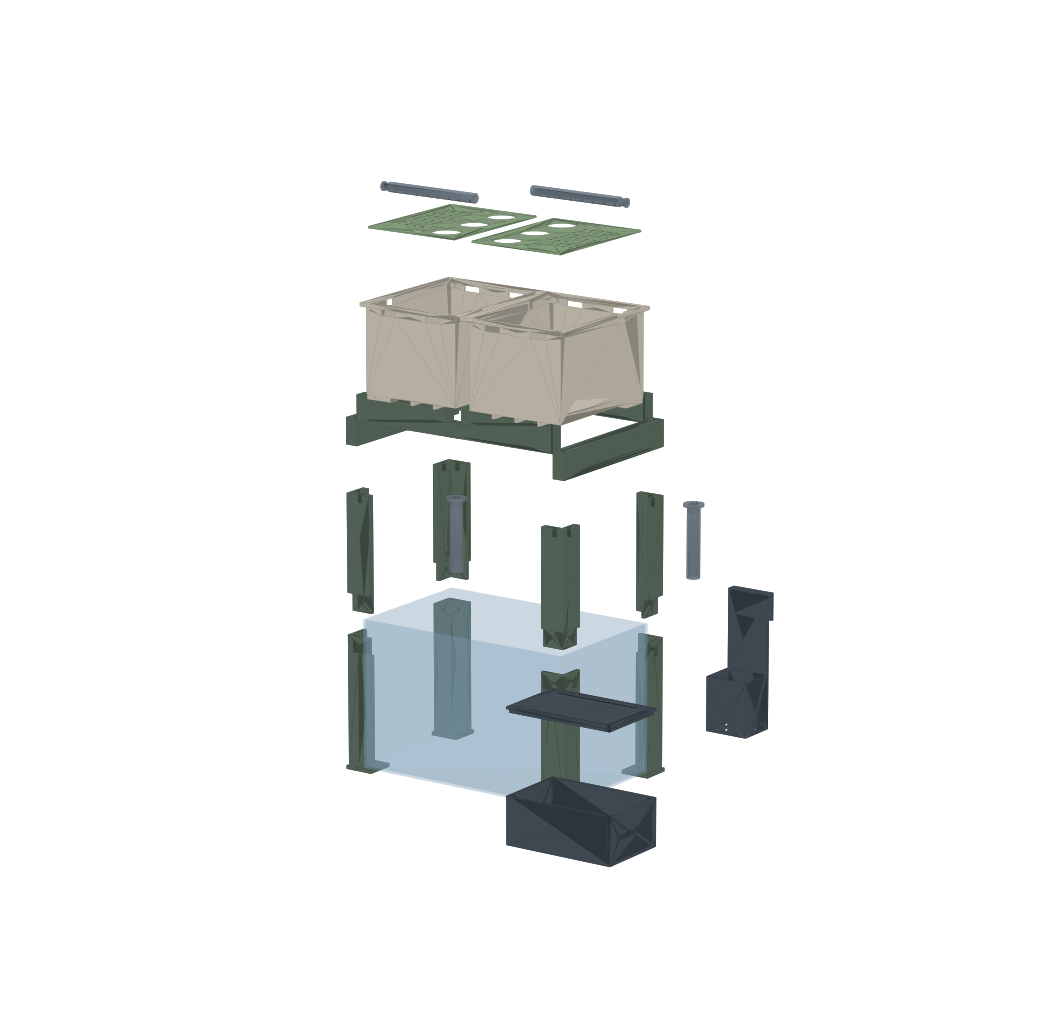
Exploded engineering view of a Polyponic module: grow trays, plant plates, frame, tank and power module.
Fig. 2 · Exploded assembly, power module at right

Every Polyponic water module is a self contained ecosystem with its own tank, its own pump and its own little world. One solar power module quietly runs up to four of them through simple plug in connectors. Modules clip side by side, and because no water flows between them, a problem in one can never spread to its neighbors. Expansion is: place, clip, plug.

1 to 4
one power module runs up to four gardens
Isolated
no shared water, so failures stay contained
Toolless
clips, not tools
06Specifications

Prototype V1, the honest spec sheet.

Footprint
44 x 29 cm, about a bar stool of balcony space
Height
44 cm
Water volume
20 litres
Operating weight
approx. 32 kg, moved empty and in parts
Growing space
6 plant positions plus 2 microgreen beds
Livestock
12 to 15 cherry shrimp plus 4 to 5 snails (default)
Power
30 W solar panel with LiFePO₄ battery, 12 V, fully off grid
Battery autonomy
approx. 2 to 3.5 days of cloudy weather (modeled)
Pump
4 W, duty cycled, sips energy
Materials
glass tank, UV stable plastics, food grade tubing
Target price
$129 to $199 per garden plus $79 to $129 power module (target, not a promise)
Download the spec sheet (PDF, 2 pages)
Front render of the Polyponic V1 prototype used as a spec sheet reference.
Fig. 3 · Reference view for dimensions
07   Gallery6 renders
IMG-01
IMG-02
IMG-03
IMG-04
IMG-05
IMG-06

From parametric CAD to ray traced reality. Every image is the real geometry we are building.

08Roadmap

Building in public.

  1. 01Complete

    Research

    182 source scientific review

  2. 02Complete

    Engineering

    biology, hydraulics, energy and structural models

  3. 03Complete

    CAD

    parametric design, 37 of 37 automated checks passed

  4. 04Complete

    Manufacturing package

    print files, BOM, assembly manual, test plan

  5. 05In progress

    Prototype build

    first unit being fabricated now

  6. 06Planned

    Physical validation

    leak, flow, solar and 8 week biology trials

  7. 07Planned

    Pilot batch

    first units to early testers

We publish the plan before the results, and the results whether they flatter us or not.

09FAQ

Questions, answered.

10   Waitlist

Watch it grow, from the very first drop.

Join the waitlist for build updates, test results and first access to the pilot batch.

No spam. Just the build, honestly told.